What Is Niche Perfumery? Why It's Worth the Investment
Share
You have smelled something that stopped you mid-step. Not a fragrance that was simply pleasant or vaguely familiar, but one that made you pause, lean closer, and think: what is that?
That reaction -- that moment of genuine surprise -- is the feeling niche perfumery exists to create.
If you have spent any time exploring fragrance beyond the department store counter, you have probably encountered the term "niche" thrown around with an air of mystery, sometimes paired with eye-watering price tags and the implication that understanding it requires a degree in French. It does not. Niche perfumery is not about exclusivity for its own sake. It is about something much simpler and much more compelling: the freedom to make something extraordinary without compromise.
Let us unpack what that actually means -- where niche comes from, what separates it from designer perfume, why it costs what it costs, and how to know whether it is the right investment for you.
The Word "Niche" -- What It Actually Means
In fragrance, "niche" refers to perfume houses whose primary or sole focus is creating fragrances. That is the distinction in its simplest form. Unlike designer brands, where perfume is an extension of a fashion empire -- a revenue stream alongside handbags, clothing, and cosmetics -- niche houses exist for the scent itself.
The word comes from the French niche, meaning a small, specialized space. In the fragrance world, it describes brands that occupy a focused, intentional corner of the market. They are not trying to appeal to everyone. They are trying to create something that resonates deeply with someone.
This is not a value judgment on designer perfume. Many designer fragrances are beautifully made, and some of the most talented perfumers in the world work on designer briefs. But the structure of the business -- the goals, the constraints, the creative process -- is fundamentally different. And that difference shows up in what ends up inside the bottle.
Niche vs Designer Perfume: The Real Differences
The niche vs designer conversation is one of the most searched topics in the fragrance world, and for good reason. From the outside, two bottles sitting side by side on a shelf can look remarkably similar. The differences are invisible until you understand what happened before those bottles arrived there.
Here is what separates them:
Creative Freedom
This is the single biggest difference, and everything else flows from it.
When a major fashion house commissions a new fragrance, the brief typically goes something like this: create something that will appeal to as wide an audience as possible, test well in focus groups across multiple markets, and be ready in time for the spring launch. The perfumer -- often working at a large fragrance house like Givaudan, Firmenich, or IFF -- may submit dozens of iterations. The final formula is chosen not solely on artistic merit but on market viability.
Niche perfumery flips that equation. The brief is not "what will sell to the most people?" It is "what is the most beautiful, most honest, most interesting version of this idea?" The perfumer has room to use unusual accords, to let a fragrance unfold at its own pace, to make creative choices that might polarize some people -- because the goal is not universal approval. It is genuine connection.
At JOOJINA, this creative freedom is central to everything we make. Our founder, Joanne Desiree Franck, spent years working within the structures of major houses -- Chanel, Guerlain, Clarins -- and with leading fragrance creation companies like MANE and Takasago. She knows intimately how the commercial fragrance world operates. She also knows what becomes possible when those constraints are removed: fragrances that are authored, not engineered.
Ingredient Quality and Selection
This is where the price conversation begins, and where it gets genuinely interesting.
Designer fragrances operate on enormous scale. A successful designer launch might produce hundreds of thousands of bottles, and the formula needs to be reproducible at that volume while maintaining a target profit margin. That math inevitably limits ingredient choices. High-cost natural ingredients -- the ones that give a fragrance depth, nuance, and that ineffable feeling of richness on the skin -- get used sparingly or replaced with more affordable synthetic alternatives.
Niche houses work at smaller scale, which changes the calculus entirely. When you are producing thousands of bottles instead of hundreds of thousands, you can afford to spend more per millilitre on raw materials. You can use real Turkish rose absolute instead of a synthetic rose accord. You can source genuine Indian sandalwood instead of a reconstruction. You can build a fragrance around iris butter -- one of the most expensive natural ingredients in perfumery, worth more by weight than gold -- because the batch size makes it viable.
This does not mean all synthetics are bad or all naturals are good. Modern perfumery would not exist without brilliant synthetic molecules, and the best niche perfumers use both naturals and synthetics with intention. The difference is one of choice versus constraint. In niche perfumery, every ingredient is there because the perfumer wanted it there, not because the budget demanded a substitution.
Concentration and Formulation
Many designer fragrances are formulated as eau de toilette or eau de parfum -- typically 5 to 20% perfume oil concentration. This keeps production costs manageable and creates a lighter, more broadly wearable scent profile.
Niche houses more frequently work at higher concentrations, including extrait de parfum, which ranges from 20 to 40% perfume oil. Higher concentration means more depth, longer lasting performance, and a scent that evolves on the skin over hours rather than fading within the first few.
Every JOOJINA fragrance is an extrait de parfum, formulated at 30 to 40% concentration. That was not a commercial decision -- it was an artistic one. When Joanne Desiree Franck creates a composition, she wants you to experience it fully: the bright opening, the evolving heart, and the deep, warm base notes that only reveal themselves hours later. That full arc requires concentration, and concentration requires commitment to the highest tier of formulation.
Batch Size and Exclusivity
A top-selling designer fragrance might produce millions of units per year. A niche fragrance might produce a few thousand. This is not manufactured scarcity -- it is a natural consequence of small-scale production using premium ingredients.
What it means for you is simple: when you wear a niche fragrance, you are far less likely to smell like everyone else in the room. Your scent becomes a genuine signature rather than a shared default.
A Side-by-Side Comparison
| Designer Perfume | Niche Perfume | |
|---|---|---|
| Primary business | Fashion, accessories, cosmetics | Fragrance (sole or primary focus) |
| Creative process | Market-driven, focus-group tested | Artisan-led, perfumer's vision |
| Ingredient sourcing | Cost-optimized for scale | Quality-optimized for craft |
| Typical concentration | EDT to EDP (5 - 20%) | EDP to Extrait (15 - 40%) |
| Production volume | Hundreds of thousands to millions | Hundreds to low thousands |
| Longevity | 3 - 8 hours typically | 6 - 24 hours typically |
| Price range | 50 - 150 euros | 100 - 500+ euros |
| Availability | Department stores, duty-free, online | Specialty retailers, brand boutiques, online |
| Scent profile | Broadly appealing, familiar | Distinctive, sometimes challenging, layered |
Why Niche Perfume Costs More -- and Why That Is Not the Same as Overpriced
Let us talk honestly about price, because it is the first question most people have and it deserves a straightforward answer.
A full-size niche fragrance often costs two to five times more than a comparable-sized designer bottle. That gap can feel significant. But when you understand where the money actually goes, the picture changes.
Raw Materials
This is the largest cost driver. Premium natural ingredients are genuinely expensive. A kilogram of high-quality oud can cost thousands of euros. Real jasmine absolute requires roughly 8,000 flowers to produce a single gram. Orris butter, derived from iris root, must be aged for up to five years before extraction, and the yield is vanishingly small. When a niche perfumer builds a formula around these materials at high concentration, the raw ingredient cost per bottle is dramatically higher than a mass-market formulation.
No Marketing Subsidies
Here is something that surprises many people: a significant portion of what you pay for a designer fragrance goes not toward the liquid inside the bottle but toward the marketing around it. Celebrity endorsements, global advertising campaigns, department store placement fees -- these costs are enormous, and they are baked into the retail price. Industry estimates suggest that marketing and distribution can account for 50 to 70% of a designer fragrance's retail price.
Niche brands typically spend a fraction of that on marketing. JOOJINA, for instance, does not pay for celebrity endorsements or glossy billboard campaigns. Instead, that investment goes where it matters most: into the liquid, the ingredients, and the craftsmanship.
Small-Batch Economics
Producing at smaller scale means less purchasing power for raw materials and packaging, higher per-unit costs for production, and smaller margins. Niche houses accept these economics because they refuse to compromise on the product itself.
The Cost-Per-Wear Reality
Here is where the math gets interesting. A niche extrait de parfum at 30 to 40% concentration requires only one or two applications per wearing. A single bottle lasts months, sometimes over a year with regular use. When you divide the purchase price by the number of wears, the cost per wearing often comes remarkably close to -- or even below -- a designer eau de toilette that you apply generously and reapply throughout the day.
This is the reframing that changes most people's minds: niche perfume is not more expensive to wear. It is more expensive to buy. Those are different things.
The Shift Toward Niche: Why Now?
The fragrance market is in the middle of a significant shift. According to industry data, the niche and artisan perfume segment has been growing at roughly double the rate of the overall fragrance market for several years running. What is driving that?
Fragrance as Identity
There is a growing desire -- particularly among younger consumers, but not exclusively -- for products that feel personal rather than generic. In a world of fast fashion and algorithmic recommendations, scent has become one of the last genuinely intimate forms of self-expression. You cannot see someone's fragrance on Instagram. It exists only in the real, physical space between two people. That intimacy makes it powerful, and it makes the desire for something unique feel important rather than indulgent.
Education and Access
Ten years ago, discovering niche fragrance required living near a specialty boutique or knowing someone in the industry. Today, fragrance communities on social media, detailed online reviews, and discovery kits have democratized access in a way that was not possible before.
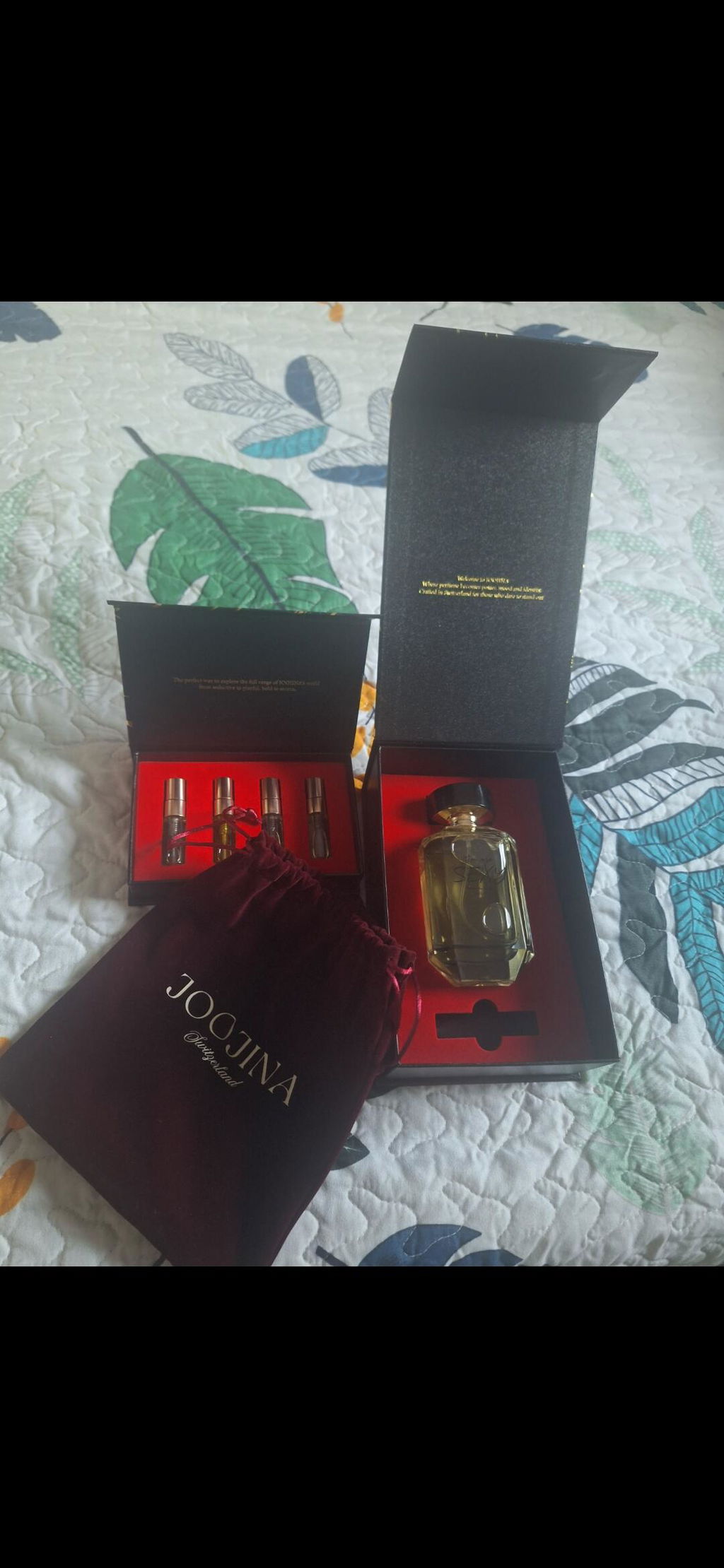
This is something we think about constantly at JOOJINA. The Discovery Kit exists specifically to lower the barrier to experiencing niche fragrance. For 25 euros, you receive all four JOOJINA fragrances as samples -- enough to wear each one properly, on your skin, over multiple days, and discover how they evolve with your own chemistry. And because the kit includes a 25 euro voucher toward any full-size bottle, you are essentially sampling for free.
Quality Over Quantity
There is a broader cultural shift away from accumulation and toward curation. People are buying fewer things but choosing them with more intention. A single extraordinary fragrance that you love -- one that feels unmistakably yours -- is more satisfying than a shelf full of bottles that are merely pleasant.
What Makes a Niche Fragrance Worth Choosing?
If you are considering your first niche fragrance -- or your next one -- here is what to look for and what to expect.
The Perfumer Matters
In designer perfumery, the perfumer's name is often invisible. You know the brand, you know the celebrity face of the campaign, but you rarely know who actually composed the scent. In niche perfumery, the perfumer is the author. Their training, their aesthetic, their obsessions -- all of it shows up in the bottle.
Joanne Desiree Franck trained at ISIPCA in Versailles, widely regarded as the most prestigious perfumery school in the world, and continued her studies at the Sorbonne. Her years working with houses like Chanel and Guerlain, and alongside master perfumers at MANE and Takasago, gave her a deep technical foundation. But it is her personal vision -- Swiss precision married to sensory warmth, craftsmanship without coldness -- that makes JOOJINA fragrances what they are.
When you choose a niche fragrance, you are choosing a point of view. That is what makes it personal.
The Experience Is Different
Wearing a niche extrait de parfum is not just a stronger version of wearing a designer spray. It is a qualitatively different experience. The scent sits closer to your skin. It unfolds over hours rather than minutes. You catch different facets of it throughout the day -- a whisper of something warm in the afternoon that was not there in the morning, a depth in the dry-down that rewards patience.
Each of the four JOOJINA fragrances offers its own version of this journey:
- YOU ARE SEXY opens with bold confidence and deepens into a sensual, magnetic warmth that lingers intimately on the skin
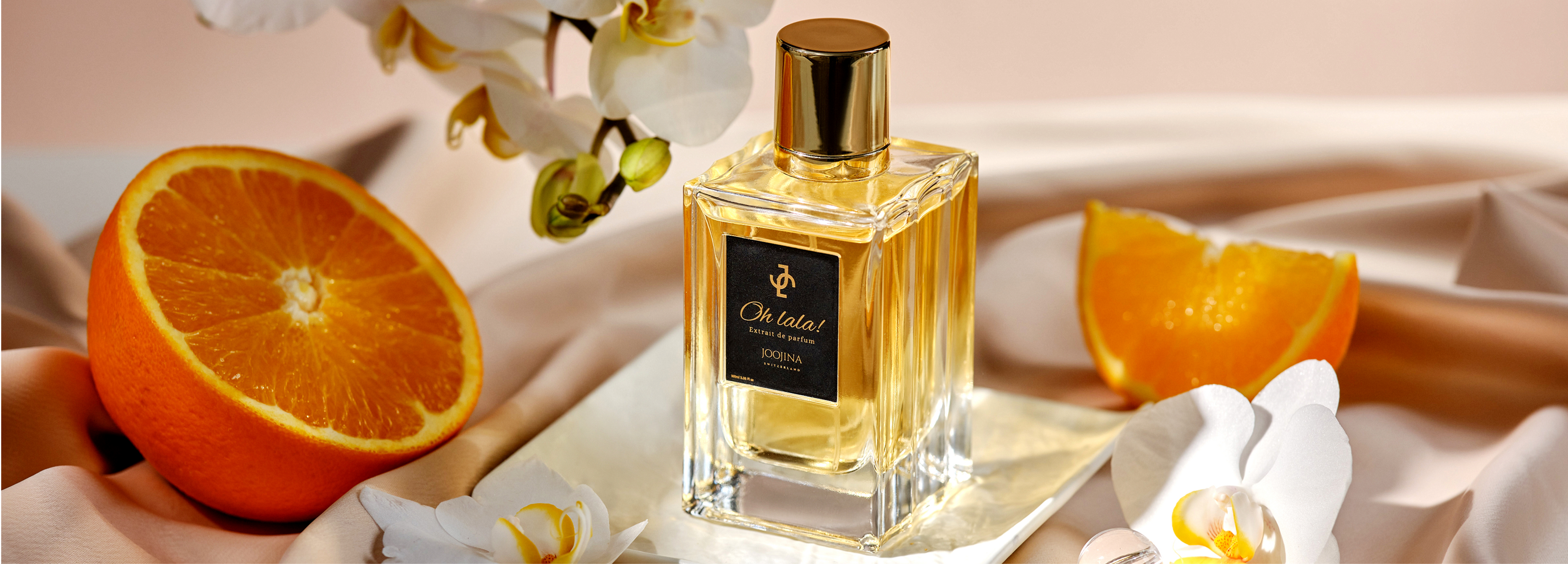
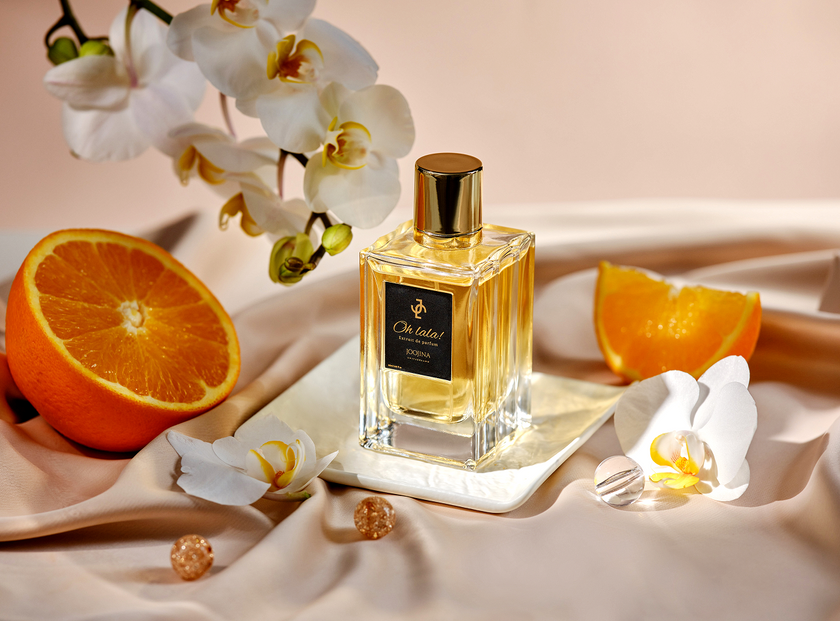
- OH LALA! is joyful and effervescent at first encounter, revealing a sophisticated heart that balances playfulness with depth
- Eau Boisee leads with refined woody notes that evolve into a quietly commanding sophistication -- the kind of fragrance that makes people lean in
- Oops I Did It Again captures spontaneity and charm, a fragrance that feels like your most magnetic, unplanned moments
Trust Your Skin, Not the Paper
One of the most important things to understand about niche fragrance -- and about fragrance in general -- is that it smells different on skin than on paper. Your body chemistry, your skin's pH, even your diet can influence how a fragrance develops. This is why sampling properly matters so much more than reading descriptions or watching reviews.
Spray it on your skin. Give it time. Wear it for a full day. Come back to it the next morning and see what remains. That slow, personal process is how you find a fragrance that truly becomes yours.
Common Questions About Niche Perfumery
Is niche perfume always better than designer perfume?
Not automatically. "Niche" describes a business model and a creative philosophy, not a guaranteed quality level. There are exceptional designer fragrances and mediocre niche ones. What niche offers is the potential for greater creative ambition, higher ingredient quality, and more distinctive results -- because the constraints are different.
Do I need to know a lot about fragrance to appreciate niche perfume?
Absolutely not. You do not need to identify individual notes or speak in industry terminology. If a fragrance makes you feel something -- confident, joyful, magnetic, at ease -- that is all the expertise you need. The complexity is there for those who want to explore it, but the beauty is accessible to anyone with a nose and a willingness to pay attention.
How do I start exploring niche fragrance without spending hundreds of euros?
Discovery kits and sample sets are the answer. Most reputable niche houses offer them, and they are the smartest way to explore. The JOOJINA Discovery Kit is designed exactly for this purpose: four extrait de parfum samples for 25 euros, with a 25 euro voucher toward a full bottle. You get to experience real niche formulations on your own skin, at your own pace, with zero financial risk.
Why do some niche fragrances smell unusual or challenging?
Because they can. Without the pressure to appeal to the broadest possible market, niche perfumers have the freedom to explore accords, ingredient combinations, and scent profiles that a focus group might reject. Not every niche fragrance will be for you -- and that is entirely the point. When you find one that resonates, the connection is deeper precisely because it was not designed to be safely agreeable.
The Bottom Line
Niche perfumery is not a trend or a status symbol. It is a different way of thinking about what fragrance can be -- a belief that the liquid inside the bottle deserves the same attention, investment, and creative ambition as the most carefully made things in your life.
It is perfume created by people who think about nothing else. Formulated with ingredients chosen for beauty, not budget. Concentrated at levels that allow the full story of a scent to unfold on your skin over hours. And produced at a scale that means what you wear genuinely reflects your taste, not an algorithm's prediction of what the most people will find inoffensive.
That is what niche means. That is what you are investing in. And once you experience the difference -- not read about it, not watch a review of it, but actually feel it on your own skin -- the value becomes unmistakable.
Ready to discover what niche perfumery feels like? Explore the full JOOJINA collection or begin with the Discovery Kit -- four Swiss-crafted extraits de parfum, yours to experience for 25 euros.