What Does ISIPCA-Trained Mean for Your Perfume?
Share
What Does ISIPCA-Trained Mean for Your Perfume?
By JOOJINA | Perfume Education
When you read that a perfumer trained at ISIPCA, it is easy to nod and move on, treating it as a credential the way you might note that a chef went to a good culinary school. But ISIPCA — the Institut Supérieur International du Parfum, de la Cosmétique et de l'Aromatique Alimentaire in Versailles — is not simply a good school. It is the institution that trained the people who shaped the fragrances you have worn your entire life, and understanding what its graduates actually learn tells you something real about what ends up in your bottle.
JOOJINA's founder, Joanne Désirée Franck, is an ISIPCA-trained perfumer. This post is not a biography. It is an honest look at what that training involves, what separates it from self-taught perfumery, and why it should matter to anyone who cares about what they put on their skin.
ISIPCA: The "Harvard of Perfumery" — And Why That Comparison Holds
ISIPCA was founded in 1970 under the patronage of the House of Guerlain, in Versailles — a city whose name alone carries centuries of refined French taste. The school sits at the intersection of science, craft, and sensory art. Its alumni have gone on to hold senior roles at Chanel, LVMH, Givaudan, Firmenich, IFF, and nearly every major fragrance house you have heard of.
The Harvard comparison is often made, and it holds for a specific reason: scarcity. ISIPCA accepts a very small cohort each year. Entry is competitive, requiring prior education in chemistry or a related science, and the curriculum is demanding enough that many who enter do not finish. The result is a small, densely skilled global community of working perfumers who share a common technical language and a shared depth of training that is simply not available anywhere else in the same form.
There are other respected perfumery programs — the Grasse Institute of Perfumery, Givaudan's internal school, IPCA in France — but ISIPCA occupies a particular position in the industry. When a brief arrives at a major fragrance house and the nose assigned to it is ISIPCA-trained, there is a shared assumption about the baseline: this person knows the materials, knows the chemistry, and has spent years training their nose under rigorous conditions.
What the Training Actually Involves
People outside the industry often assume that becoming a perfumer is primarily about having a "good nose." The nose matters, of course — but it is closer to the end of the story than the beginning. ISIPCA training is built on a foundation of chemistry, formulation science, and an almost athletic discipline of olfactory training.
1. Memorising over 3,000 raw materials
A working perfumer needs to hold an enormous palette in their head. At ISIPCA, students learn hundreds of raw materials — naturals like Bulgarian rose absolute, Haitian vetiver, and orris root, as well as synthetic molecules like Iso E Super, Ambroxan, and Hedione — not just their names, but their olfactory signatures, their chemical structures, their behaviour in a formula, their volatility, their tenacity on skin, and how they interact with other materials. This is done by smelling, labelling, smelling again, and being tested, over and over across the length of the program.
The difference between a perfumer who knows 3,000 materials and one who knows 300 is not merely encyclopedic. It is creative. A broader palette means more options when you are trying to achieve a specific effect — the difference between a musician who knows three chords and one who has studied harmony for years. Both can make music. Only one can hear a problem in the composition and solve it.
2. Formulation chemistry
Fragrance formulation is chemistry. The volatility of a molecule determines whether it appears in the top, heart, or base of a perfume. The concentration at which a material is used affects not just intensity but character — a material that smells rich and velvety at 1% can turn sharp or synthetic at 5%. Certain molecules react with UV light and cause skin irritation; certain natural extracts contain allergens that must be calculated against IFRA (International Fragrance Association) limits. At ISIPCA, students learn to navigate all of this.
This is why the self-taught versus formally trained distinction is not snobbery — it is practical. A perfumer without chemistry training can create beautiful things, but they are working with fewer tools for diagnosing problems, ensuring safety, achieving consistent performance across batches, and understanding why a formula behaves differently on different skin types.
3. Olfactory training as a discipline
The nose can be trained. This is one of the more important facts about perfumery that most people do not know. Olfactory sensitivity is partly innate, but the ability to identify, distinguish, and remember smells is a skill that improves with systematic practice. ISIPCA students undergo structured olfactory training throughout their studies — blind identification exercises, comparative evaluations, accords analysis. The goal is to build a sensory memory that is both precise and reliable.
Think of it this way: most people can tell that two wines taste different. A trained sommelier can tell you the grape variety, the region, roughly the vintage, and identify a fault in the barrel process. The difference is not magic. It is hours of structured, supervised practice with feedback. ISIPCA does this for smell.
From ISIPCA to the Sorbonne to the Industry
Joanne Désirée Franck's path went beyond ISIPCA. She went on to study at the Sorbonne — the addition of humanities and cultural history to a deeply technical perfumery education gives her work a particular quality: it is informed by both the science of what a molecule does and the cultural and aesthetic context in which fragrance has existed for centuries.
After her formal education, Joanne worked alongside Chanel, Guerlain, Clarins, MANE, and Takasago — the names that built the modern fragrance industry. This is where formulation knowledge meets real-world constraints: tight briefs, commercial viability, brand identity, consumer testing, iteration. The difference between a student formula and a formula built from this kind of industry experience is enormous. You are not just smelling better ingredients when you smell the result — you are smelling decisions refined across hundreds of iterations, in contexts where standards are not aspirational but required.
You can read more about the Swiss perfumery tradition and what distinguishes it from other fragrance cultures. The Swiss context matters — the precision, the material quality, the absence of compromise that characterises Swiss craft — and Joanne's work operates within that tradition.
What Self-Taught Perfumers Can and Cannot Do
This is worth addressing directly, because the answer is nuanced. Self-taught perfumers have created genuinely original and beautiful work. The fragrance world is large enough that talent and obsession can produce excellent results without institutional credentials. There are indie perfumers who are working at a very high level.
But formal training provides things that are difficult to replicate through self-study. The breadth of materials — access to the industrial palette, not just what is available through hobby suppliers. The systematic olfactory training with expert feedback. The chemistry foundation that allows a perfumer to diagnose and solve formulation problems methodically. The real-world industry experience working to the standards of houses like Chanel.
For a consumer, the practical effect is this: a formally trained perfumer is less likely to produce a formula with stability problems, more likely to understand how a fragrance will perform on different skin types, and better equipped to work with high-concentration formats like extrait de parfum — where every ingredient is under greater scrutiny because there is less to hide behind.
All of JOOJINA's fragrances are extrait de parfum at 30–40% concentration. That is not a marketing claim. It is a formulation decision that only makes sense if you know what you are doing with every single ingredient in the formula. At those concentrations, the character of each material is exposed fully — there is no thin spray of eau de toilette to soften the rough edges. The training matters here, specifically.
If the concept of niche perfumery and why it matters is new to you, our post on what niche perfumery is and whether it is worth the investment covers the wider context well.
What This Means in the Bottle
Abstract credentials aside, the question a perfume wearer should ask is: does any of this show up in what I am actually smelling?
Yes — though not always in obvious ways. Consider YOU ARE SEXY, JOOJINA's warm amber and musk extrait. The opening is bold — you feel it immediately on the skin, a heat that rises and settles into something dense and smooth. What does not happen is what separates it from many perfumes in this style: it does not turn sharp, it does not go synthetic, it does not lose its coherence as it dries down. That behaviour — the transition from opening to heart to base without a jarring shift — is a formulation achievement. It requires knowing your materials well enough to build a structure that holds.
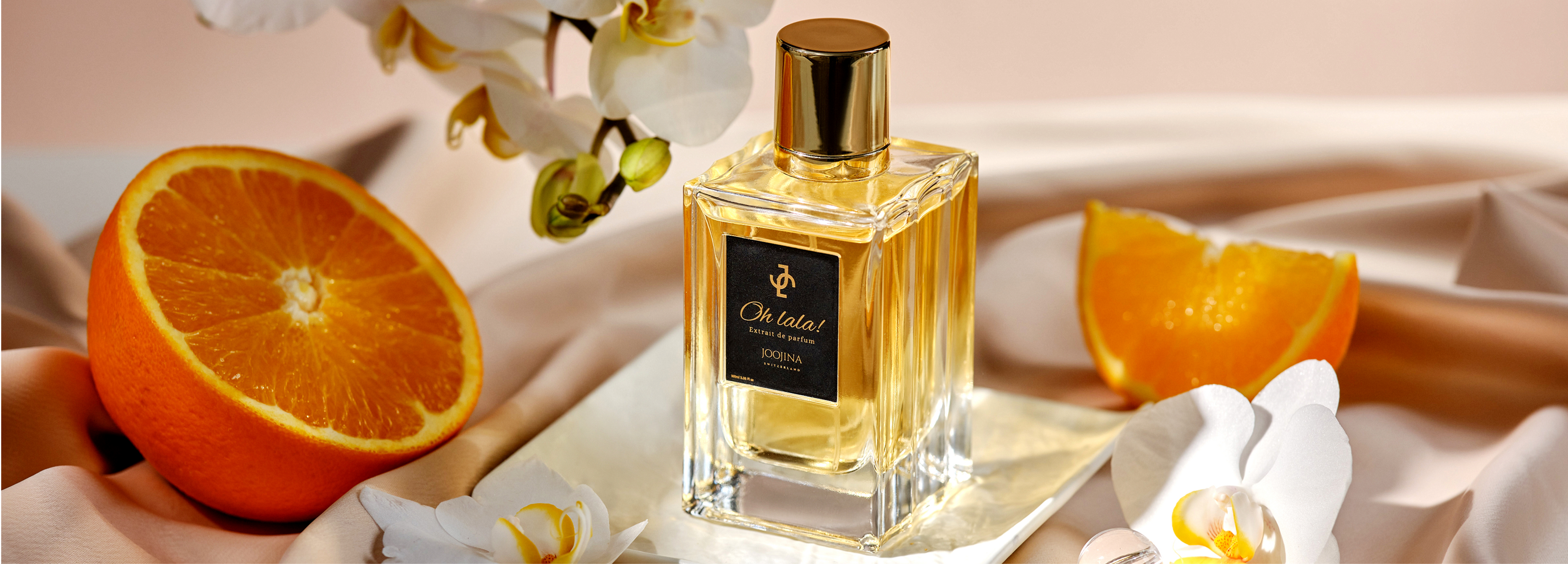
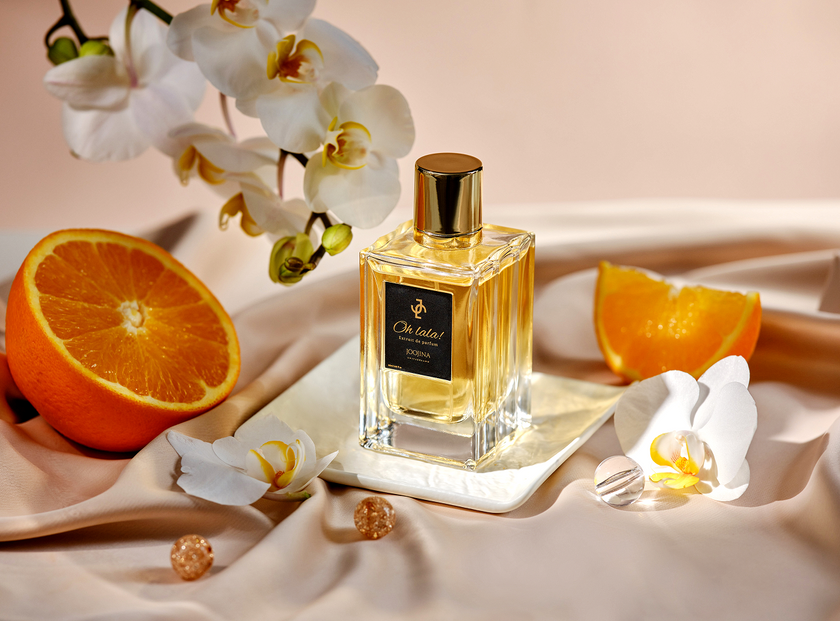
OH LALA! is a different challenge: mandarin, vanilla, heliotrope — a joyful, bright composition that needs to stay light without losing depth. Getting citrus to last beyond the first twenty minutes requires specific knowledge of fixation and the correct supporting structure in the base. The vanilla does not overwhelm, the heliotrope adds a powdery softness without going soapy. These are not accidents.
Eau Boisée works with sandalwood and cedar — materials that can easily read as generic "woody" without the skill to differentiate them. There is a specific quality to properly handled sandalwood: a creaminess that sits close to the skin and develops warmth over hours of wear. That character requires using the right sandalwood source and understanding how to let it anchor the formula without smothering the other materials.
And Oops I Did It Again — the most spontaneous-feeling of the four — carries a lightness that masks a precise structure underneath. Floral compositions that feel effortless are some of the hardest to build. Anything off in the proportions reads as cheap or cloying. The ease in the wearing is the result of the work that went in.
Why Independent Houses Trained This Way Are Rare
Most ISIPCA graduates go to work for large fragrance ingredient companies — Givaudan, IFF, Symrise — or for in-house perfume labs at major brands. The economics make sense: those institutions can absorb the value of the training and pay accordingly. A graduate who chooses instead to build an independent house is making a deliberate choice to work on a smaller scale, with full creative control, accepting the harder commercial path in exchange for not answering to a brief written by a marketing committee.
That is the JOOJINA position. The fragrances on the JOOJINA collection exist because Joanne Désirée Franck chose to build something that could not exist inside a large house — too direct, too personal, too unwilling to sand down the edges for mass appeal. The ISIPCA training is not a certificate on a wall. It is the technical foundation that makes it possible to operate at this level without the resources of a large institution behind you.
Frequently Asked Questions
Is ISIPCA the only route to becoming a professional perfumer?
No. There are other routes — the Grasse Institute of Perfumery, internal training programs at ingredient houses like Givaudan or Firmenich, and independent study combined with industry apprenticeships. What ISIPCA provides is a particularly rigorous, science-grounded curriculum with access to the full professional palette of raw materials, in Versailles — the historic centre of French perfumery culture. It is one of the most complete paths, but not the only one.
How long does ISIPCA training take?
The core programs range from one to three years depending on the track. The most intensive programs combine advanced chemistry with full olfactory training and formulation practice. Joanne's training was followed by study at the Sorbonne and then years of applied experience working with Chanel, Guerlain, Clarins, MANE, and Takasago — the full education spans well over a decade of formal study and professional practice combined.
Does formal training guarantee a better perfume?
Not automatically. Training gives a perfumer better tools — broader material knowledge, stronger formulation chemistry, a more calibrated nose. What they do with those tools depends on vision, taste, and creative judgment. Formal training combined with genuine creative ambition produces the best results. Training without vision produces technically competent but uninspiring perfumes. Vision without training can produce original work but runs real risks with stability, safety, and consistency.
Why does JOOJINA use extrait de parfum concentration for everything?
Because it is the most honest format for a perfume. At 30–40% concentration, every ingredient counts. There is nowhere to hide a weak accord or a poorly chosen base material. It also means fewer re-applications, better skin development over the day, and a fuller olfactory experience. It requires more skill to formulate well — which is precisely why most mass-market fragrance does not go near it.
Smell the Training for Yourself
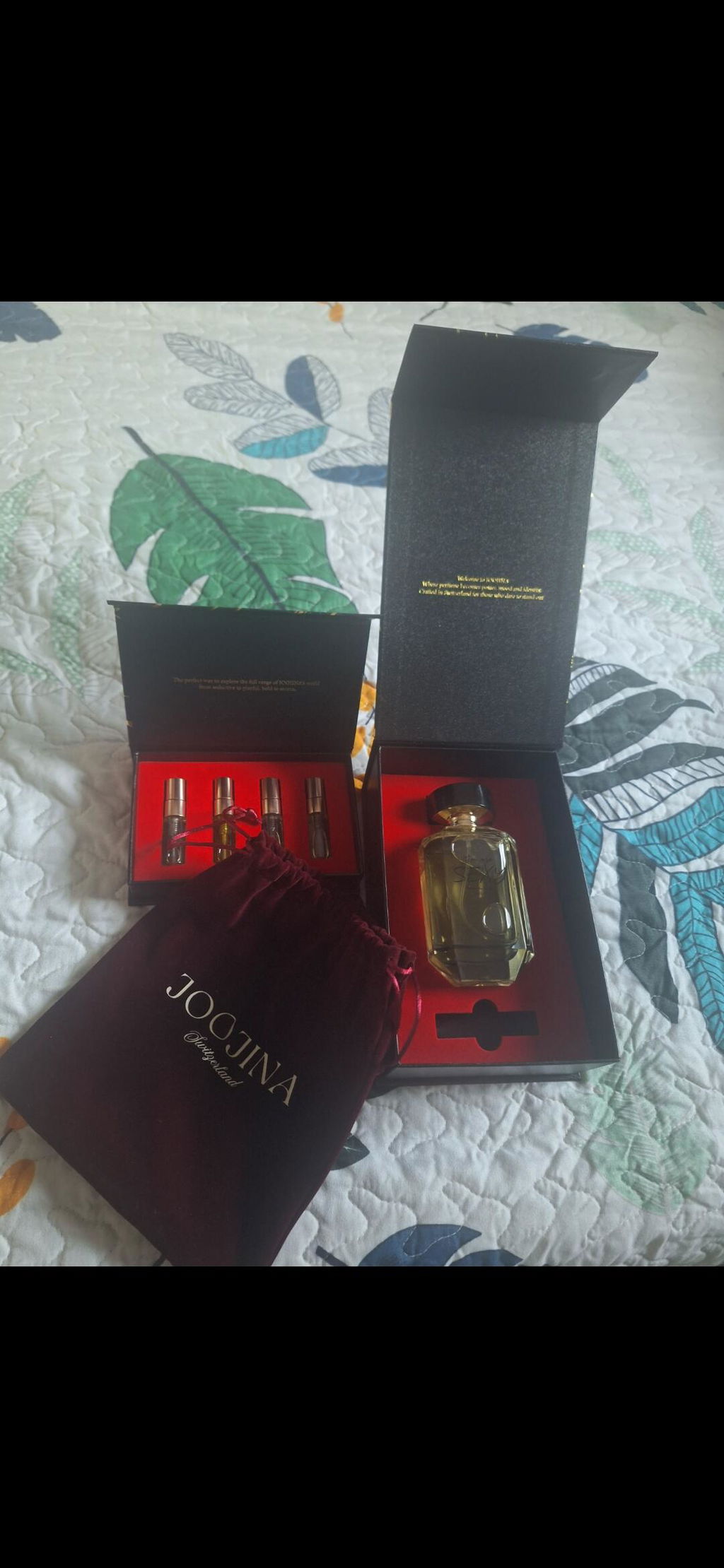
The best way to understand what ISIPCA-level training produces is not to read about it — it is to smell it. JOOJINA's Discovery Kit gives you four 3ml samples of every fragrance in the collection — YOU ARE SEXY, OH LALA!, Eau Boisée, and Oops I Did It Again — for EUR 25, with a EUR 25 voucher toward any full-size bottle. It is designed for exactly this: spend an evening with each scent, wear them on skin, observe how they develop. The structure, the quality of materials, the transitions — all of it is there to be experienced directly.
Four extraits de parfum, four hours of education. No better way to understand what years of training actually smells like.