The Art of Swiss Perfumery: A Tradition of Excellence
Share
When someone says "Swiss craftsmanship," your mind probably goes straight to watches. Maybe chocolate. Perhaps precision engineering or private banking. What almost certainly does not come to mind is perfume.
And that is exactly what makes Switzerland one of the most fascinating — and most underestimated — countries in the world of fragrance.
While France has always worn the crown as the spiritual home of perfumery, Switzerland has been quietly shaping the global fragrance industry for over a century. Some of the most important fragrance companies on the planet are headquartered here. Some of the rarest and most coveted ingredients in perfumery grow in Alpine meadows. And a growing number of independent Swiss perfume houses are proving that Swiss precision is not just for watch movements — it belongs in a perfume bottle too.
This is the story of Swiss perfumery. How it started, why it matters, and what makes a fragrance born in Switzerland fundamentally different from one made anywhere else.
Switzerland's Hidden Role in Global Perfumery
Here is a fact that surprises most people: Switzerland is home to two of the largest and most influential fragrance and flavor companies in the world — Firmenich and Givaudan. Both are headquartered in Geneva, and between them, they are responsible for creating the scents behind a staggering number of the perfumes, personal care products, and luxury fragrances you encounter every day.
Givaudan, founded in 1895, is the world's largest fragrance and flavor company. Firmenich, established that same year, is the largest privately owned company in the industry. Together, they develop fragrances for nearly every major luxury house you can name — from haute couture fashion houses to exclusive niche brands.
This is not a coincidence. Switzerland's position at the crossroads of French creativity, German technical rigor, and Italian sensory richness has made it uniquely fertile ground for the art and science of fragrance. The Swiss did not copy the French tradition — they built something parallel to it, combining artistry with an almost obsessive commitment to precision.
And then there are the independent Swiss perfume houses. Smaller, more personal, and fiercely committed to quality over volume. Brands that focus on a curated collection of fragrances, each one formulated with the kind of care you would expect from a country that considers "good enough" a personal insult.
Why Swiss Precision Matters in Fragrance
There is a reason Switzerland became synonymous with excellence in watchmaking, and it has nothing to do with luck. It comes down to a cultural philosophy: the belief that something made with extreme care, using the finest possible materials, following rigorous processes, will always be superior to something made quickly and cheaply.
That philosophy translates directly to perfumery, and it shows up in ways you might not expect.
Formulation Exactness
Creating a fragrance is, at its core, an act of chemistry. A single perfume formula can contain anywhere from 30 to over 200 individual ingredients, each measured in precise quantities. Shift the proportion of a single ingredient by even half a percent, and the entire character of the fragrance can change — a warm, inviting amber becomes cloying, or a bright citrus opening turns thin and sharp.
Swiss-trained perfumers and Swiss fragrance houses tend to approach this with extraordinary discipline. Formulations are tested, refined, and tested again. There is no rushing a fragrance to market because a seasonal deadline demands it. The formula is ready when it is right, not when it is convenient.
Quality Control
In Swiss fragrance production, quality control is not a final checkbox — it is embedded in every stage of the process. From the sourcing of raw materials to the blending, aging, maceration, and bottling, every step is measured against exacting standards.
Maceration — the process of allowing a blended fragrance to rest and mature after mixing, much like aging a fine wine — is a stage that many mass-market producers rush or skip entirely. Swiss perfumers tend to respect this process, allowing the fragrance to reach its full potential before it ever reaches a bottle. The result is a smoother, more harmonious scent from the very first spray.
Ingredient Integrity
Swiss fragrance houses, particularly independent ones, are known for their commitment to using high-quality raw materials — sourcing genuine natural essences rather than defaulting to synthetic substitutes, and maintaining long-term relationships with ingredient suppliers who share the same commitment to quality.
This does not mean Swiss perfumery rejects synthetics. Some of the most important innovations in synthetic fragrance molecules have come from Swiss laboratories. But there is a difference between using synthetics thoughtfully, as creative tools, and using them as cost-cutting shortcuts. Swiss perfumery overwhelmingly tends toward the former.
Alpine Ingredients: Switzerland's Natural Fragrance Palette
Switzerland's geography gives its perfumers access to something that no amount of money can replicate: the Alpine environment.
The Swiss Alps and their surrounding valleys, meadows, and lakeshores produce a range of botanicals and natural ingredients that have been prized in perfumery for centuries. The high altitude, clean air, intense UV exposure, and dramatic temperature swings between day and night cause Alpine plants to produce unusually concentrated aromatic compounds — the plants' natural defense and communication mechanisms, which happen to be exactly the molecules perfumers most value.
Here are some of the most notable Alpine ingredients that appear in Swiss and international perfumery:
| Ingredient | Scent Profile | Why It Matters |
|---|---|---|
| Swiss stone pine (Pinus cembra) | Warm, resinous, balsamic | Provides a distinctly Alpine woody base note |
| Edelweiss extract | Soft, honeyed, slightly herbaceous | Rare and symbolic of Swiss Alpine purity |
| Alpine lavender | Cleaner and more aromatic than lowland varieties | Higher altitude means more concentrated essential oils |
| Gentian root | Earthy, bitter, complex | Used in both fragrance and traditional Swiss herbal preparations |
| Wild Alpine rose | Delicate, green, subtly floral | A fleeting, precious note prized for its naturalism |
| Linden blossom | Sweet, honeyed, green | Abundant along Swiss lakeshores and valleys |
| Swiss beeswax absolute | Warm, waxy, golden | A textural ingredient that adds depth and warmth |
Beyond specific botanicals, the Swiss environment itself — the clarity of mountain air, the mineral quality of glacial water, the crispness of high-altitude forests — has shaped an aesthetic sensibility among Swiss perfumers. Swiss fragrances often carry a certain luminosity, a clean transparency even within rich or complex compositions. Not "freshness" in the shallow, detergent-like way that word is often used in mass-market fragrance, but clarity of intention — every note distinct, every element purposeful, nothing muddled.
The Swiss Riviera: Lausanne and the Heart of Fragrant Switzerland
If Geneva is the industrial capital of Swiss perfumery — home to the corporate headquarters of the global giants — then Lausanne and the Swiss Riviera represent its creative and artistic soul.
Lausanne sits on the northern shore of Lake Geneva, surrounded by terraced vineyards that are a UNESCO World Heritage Site, with the Alps rising dramatically across the water. It is a city of culture, education, and refined living — home to world-class universities, a thriving arts scene, and a long tradition of attracting creative minds from across Europe.
It is also, not coincidentally, where JOOJINA was born.
There is something about this part of Switzerland that lends itself to fragrance creation. The sensory landscape is extraordinarily rich — the mineral freshness of the lake, the green warmth of the vineyards, the crisp Alpine air descending from the mountains above. Living here is a daily education in how environment shapes scent, and how scent shapes memory.
For a perfumer, Lausanne offers something rare: the intersection of French artistic tradition (it is, after all, in the French-speaking part of Switzerland, just an hour from the French border) and Swiss discipline. The creativity of Grasse and Paris meeting the precision of Geneva and Zurich. A place where beauty and rigor are not opposites, but inseparable partners.
Key Figures and Houses in Swiss Perfumery
Switzerland's contribution to the world of fragrance extends far beyond Firmenich and Givaudan. Here are some of the people and houses that have helped define what Swiss perfumery means:
Alberto Morillas — One of the most celebrated perfumers alive, Morillas was born in Spain but spent the bulk of his career at Firmenich in Geneva. He is the nose behind iconic fragrances like CK One, Acqua di Gio, and dozens of other modern classics. His work embodies the Swiss approach: technical mastery in service of emotional impact.
Calice Becker — Another Firmenich star, Becker created J'adore for Dior, one of the best-selling perfumes in history. She also directs the Firmenich Perfumery School, training the next generation of perfumers in Geneva.
Andy Tauer — A former scientist turned independent perfumer based in Zurich, Tauer has become one of the most respected names in niche perfumery. His brand, Tauer Perfumes, is known for bold, uncompromising compositions created entirely by his own hand. He represents the Swiss independent spirit — small-batch, artisanal, and utterly uninterested in following trends.
These names only scratch the surface. Switzerland's perfumery culture is deep and growing deeper, as a new generation of independent perfumers and niche houses emerge across the country.
What Makes a Swiss Fragrance Different?
If you line up ten fragrances from ten different countries, could you identify the Swiss one? Perhaps not with certainty — fragrance is too personal and too varied for easy national categorizations. But there are tendencies, qualities that Swiss perfumery returns to again and again:
Precision of composition. Swiss fragrances tend to feel carefully constructed. Every ingredient is there for a reason. There is a clarity and intentionality to the structure that you can sense even if you cannot articulate it — each note is in its right place, and nothing feels accidental or superfluous.
Quality of materials. You can smell the difference between a fragrance built around high-grade naturals and one that relies on budget synthetics. Swiss perfumery, particularly at the niche and luxury level, tends to lean heavily toward premium raw materials. The result is a richness and depth that cheaper formulations simply cannot match.
Longevity and development. Perhaps because of the Swiss cultural aversion to waste, Swiss fragrances are often formulated for staying power. They are built to last, to evolve on the skin over hours, to reward patience. A fragrance that disappears after two hours would be considered a failure by most Swiss perfumers — it would mean the formula was not working hard enough.
Understated confidence. Swiss luxury, broadly speaking, is not about logos and flash. It is about knowing the quality is there, even if not everyone can see it. Swiss fragrances often carry this same quality — confident, substantial, but not screaming for attention. The kind of scent that makes someone lean in closer and ask, "What are you wearing?"
JOOJINA: Swiss Perfumery, Independent Spirit
This is the tradition that JOOJINA was born into and born from.
Our founder, Joanne Desiree Franck, trained at ISIPCA in Versailles — widely considered the world's premier fragrance school — and at the Sorbonne in Paris. She then honed her craft working alongside some of the greatest names in the industry: Chanel, Guerlain, Clarins, and the leading fragrance creation houses MANE and Takasago. That education and experience gave her both the French artistic foundation and the deep technical knowledge that Swiss perfumery demands.
But she chose to build JOOJINA in Lausanne, on the Swiss Riviera, because this is where both halves come together. The French sensibility for beauty and emotion. The Swiss insistence on excellence and integrity. Every JOOJINA fragrance carries both of these influences in its DNA.
And every JOOJINA fragrance is an extrait de parfum — formulated at 30 to 40% perfume oil concentration. This is the highest concentration category in perfumery, and it is a deliberate choice that reflects the Swiss philosophy of doing something properly or not at all. Why create a diluted version of a scent when the most beautiful, most complete, most lasting version is the extrait?
Each of our four fragrances expresses a different facet of this philosophy:
- YOU ARE SEXY — Bold, sensual, and unapologetically confident. A fragrance that commands attention through sheer quality of composition, not volume.
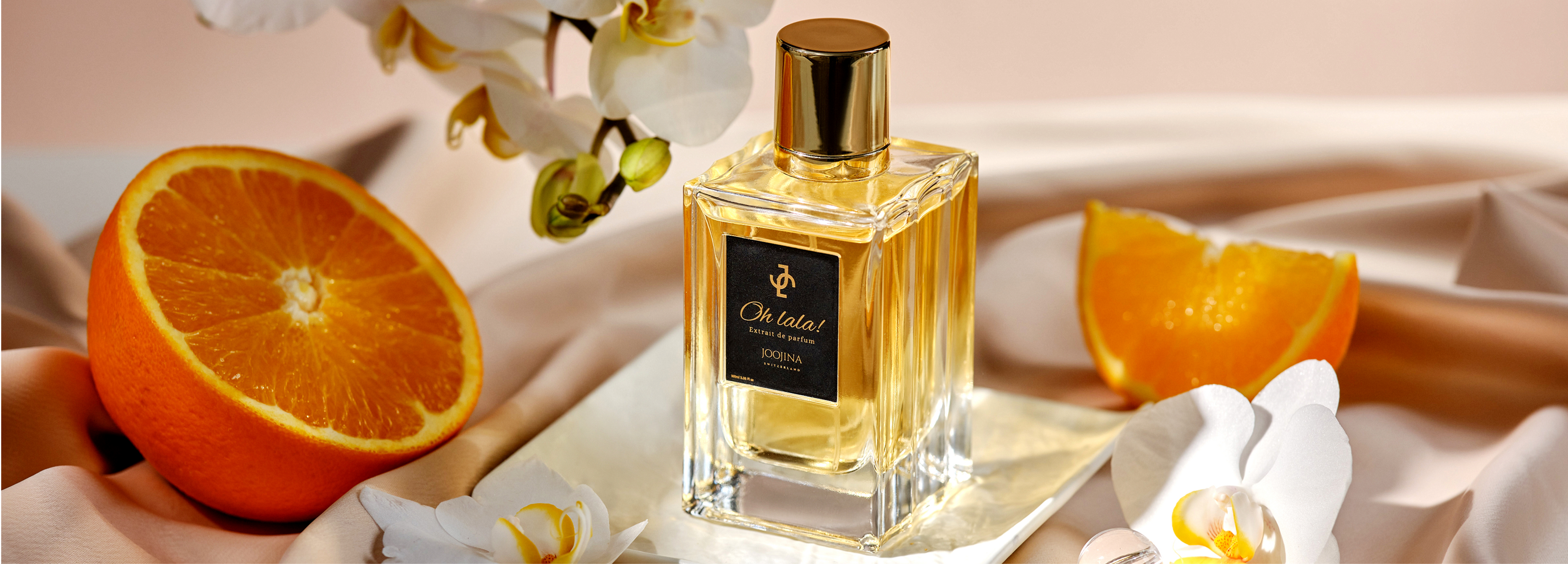
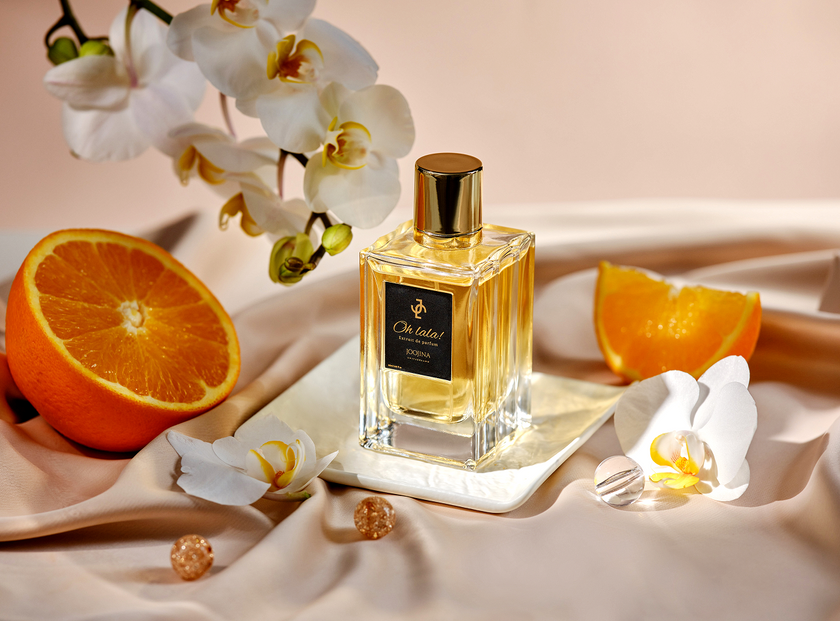
- OH LALA! — Joyful, playful, and radiant. The scent of someone who moves through life with warmth and optimism.
- Eau Boisee — Woody, sophisticated, and grounded. A fragrance built around the noble materials of traditional perfumery, rendered with modern clarity.
- Oops I Did It Again — Playful, spontaneous, and irresistible. The scent of someone who follows their instincts and never apologizes for it.
Each one is crafted to last — 8 to 24 hours on skin — and to evolve beautifully over that time, revealing new facets as the hours pass. That is what extrait concentration allows, and it is what Swiss perfumery demands.
The Future of Swiss Perfumery
Swiss perfumery is having a moment. As consumers around the world grow more knowledgeable, more discerning, and more interested in understanding what goes into the products they buy, the Swiss approach — quality materials, transparent practices, craft over marketing — resonates more powerfully than ever.
The rise of niche perfumery globally has opened doors for Swiss independent houses that might have struggled to find an audience twenty years ago. Today, fragrance lovers actively seek out small-batch, artisan-produced perfumes. They want to know who made their fragrance, where, and why. They want the story to be genuine.
The combination of heritage, innovation, and integrity positions Swiss perfumery not just as a respected tradition, but as a model for where luxury fragrance is heading. The future belongs to houses that can combine artistry with accountability, beauty with substance, creativity with craft. That has been the Swiss way all along.
Discovering Swiss Perfumery for Yourself
Reading about fragrance can only take you so far. At some point, the only way to understand what makes Swiss perfumery special is to experience it on your own skin.
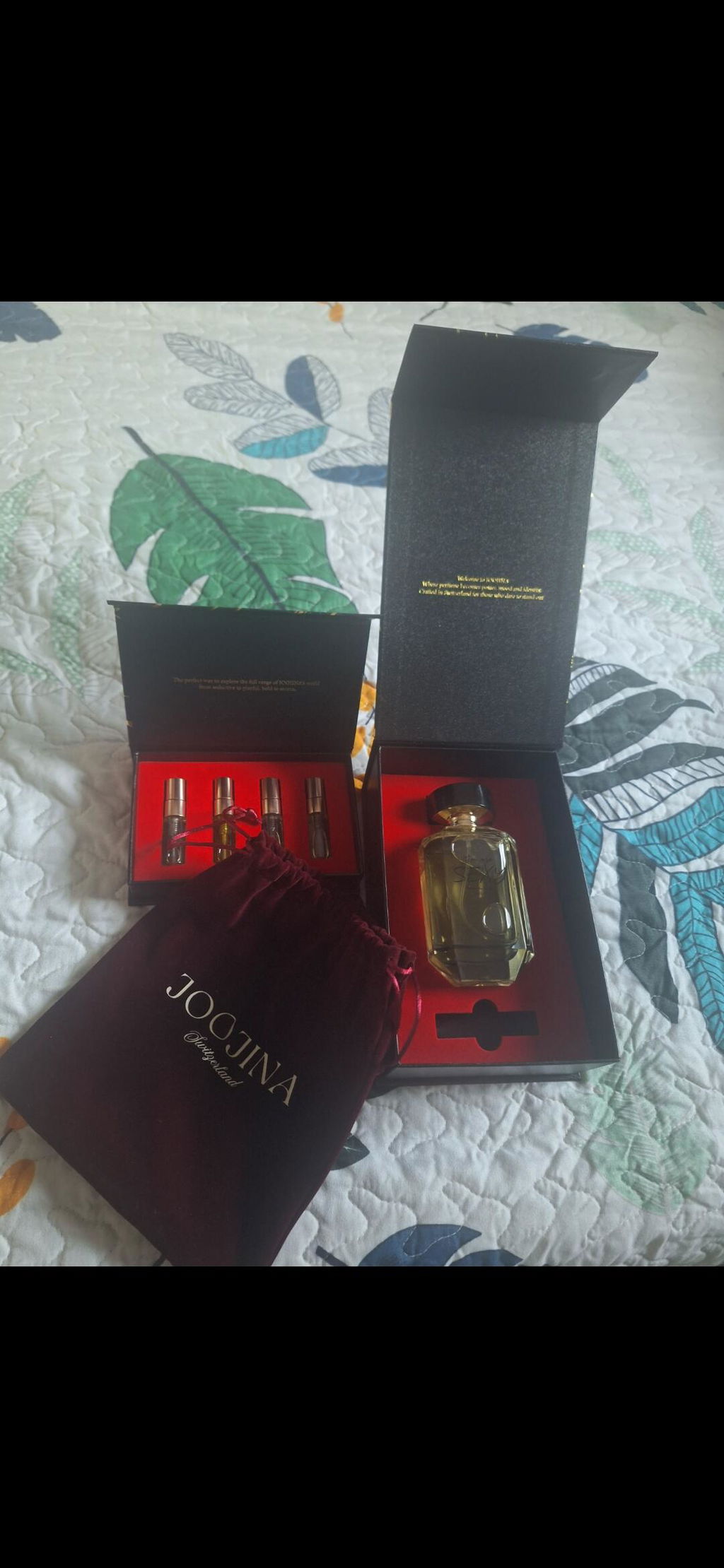
The JOOJINA Discovery Kit was created for exactly this moment. For 25 euros, you receive samples of all four JOOJINA extraits de parfum — each one a window into what Swiss fragrance craftsmanship feels and smells like at its best. And because the kit includes a 25 euro voucher toward any full-size bottle, you are essentially exploring the collection at no cost.
Wear each one for a full day. Notice how the scent evolves over eight, twelve, even twenty hours on your skin. Pay attention to the clarity of the notes, the smoothness of the transitions, the richness of the base. That is what Swiss perfumery, at its finest, delivers.
Ready to experience Swiss perfumery on your own skin? Explore the full JOOJINA collection or begin with the Discovery Kit — four extraits de parfum, crafted in Lausanne, delivered to your door.