How to Choose Your Signature Scent: A Perfumer's Guide
Share
A signature scent is one of the most personal choices you will ever make. A fragrance lives on you, changes with you, and — if you choose well — becomes inseparable from how people remember you. The scent of someone you love lingers in a room long after they have left. That is the power of what you are choosing.
And yet, most people pick their perfume in about ninety seconds. A quick spray at the department store, a nod, a purchase. Then three weeks later, the bottle sits on a shelf, half-forgotten, because something about it just did not feel right.
Finding your signature fragrance is not about luck or having some innate "nose." It is about understanding a few key principles — what scent families exist, how fragrance interacts with your skin chemistry, and how to test properly so you are not fooled by a dazzling first impression that fades into something you do not love.
This guide will walk you through all of it. No jargon, no pretension. Just practical, honest advice from the world of perfumery.
What Makes a Fragrance a "Signature Scent"?
A signature scent is a fragrance that feels like you. Not one you wear because it was trending or because someone else smelled wonderful wearing it. It is the one that makes you feel more like yourself — more confident, more grounded, more alive. It is the fragrance people start to associate with your presence.
Some people have one signature scent for decades. Others rotate between two or three depending on mood or season. There is no rule that says you must be loyal to a single bottle. But most fragrance lovers have at least one they always come back to — the one that feels like home.
Step 1: Understand the Scent Families
Every fragrance belongs to one or more scent families. Think of these as the broad flavour profiles of the fragrance world — the way you might describe food as sweet, savoury, or spicy before getting into specific dishes.
There are four major families:
| Scent Family | Key Notes | Character | Often Loved By |
|---|---|---|---|
| Fresh | Citrus, green leaves, aquatic notes, light herbs | Clean, energetic, breezy | Those who gravitate toward "clean" or sporty scents |
| Floral | Rose, jasmine, tuberose, iris, lily, peony | Romantic, elegant, feminine (though not exclusively) | Those who love classic perfumery and natural beauty |
| Woody | Sandalwood, cedar, vetiver, oud, patchouli | Warm, grounding, sophisticated | Those who prefer depth and quiet confidence |
| Oriental (Amber) | Vanilla, amber, incense, spices, resins, musk | Rich, sensual, enveloping | Those who love warmth, mystery, and evening wear |
Most modern fragrances blend elements across families — a floral heart anchored by woody base notes, or a fresh opening that dries down into warm amber. But knowing which family appeals to you most gives you a starting point far better than wandering blindly through hundreds of options.
A quick self-test: Think about the scents you already love in everyday life. Do you linger in the soap aisle over anything with sandalwood? Do you love the smell of fresh-cut herbs in the garden? Do you keep buying vanilla-scented candles? Your instinctive preferences are already pointing you toward your family.
Step 2: Learn How Fragrance Structure Works
You have probably heard the terms "top notes," "heart notes," and "base notes." These are not marketing language — they describe the actual architecture of how a fragrance reveals itself over time.
Top notes are what you smell in the first five to fifteen minutes after application. They are the bright, volatile ingredients — citruses, light florals, herbal accords — that evaporate quickly. They are the first impression, and they are designed to be captivating. But here is the critical thing to understand: top notes are not the fragrance. They are the introduction.
Heart notes (or middle notes) emerge as the top notes fade, usually fifteen minutes to an hour after application. This is the core of the fragrance — the personality. Florals, spices, fruit accords, and aromatic herbs often live here. The heart is what you will smell for most of the fragrance's life on your skin.
Base notes are the foundation. They appear last, often an hour or more after application, and they linger the longest — sometimes for the rest of the day. Woods, musks, ambers, resins, and vanilla are classic base note ingredients. The base is what people smell when they lean in close hours after you applied your perfume. It is, in many ways, the most important part.
This is why choosing a fragrance based on the first spray is one of the biggest mistakes you can make. That initial burst of bergamot and pink pepper might be thrilling, but if the base note is a musk that does not agree with your skin, you will spend the next eight hours wearing something you do not enjoy. The signature scent you are looking for lives in the heart and base — not the opening.
Step 3: Understand Your Skin Chemistry
Here is something that surprises many people: the same perfume can smell noticeably different on two different people. This is not a myth or marketing mystique — it is chemistry.
Your skin's pH level, oil content, diet, and even body temperature all influence how fragrance molecules behave on you. Drier skin absorbs fragrance quickly and releases it in shorter bursts. Oilier skin holds onto fragrance longer and can amplify warmer, richer base notes.
This is one of the reasons why higher-concentration fragrances, like extraits de parfum, often perform more consistently across different skin types. With more perfume oil on the skin, there is simply more material for the fragrance to work with, which means less variability and more faithful reproduction of what the perfumer intended.
What this means for your search: Never choose a signature scent based on how it smells on a paper blotter, on a friend, or in a magazine description. You must smell it on your own skin, after at least thirty minutes, ideally after a few hours. There is no shortcut here.
Step 4: Test Properly (Most People Get This Wrong)
The way most people test fragrance is designed to lead them astray: walk into a store, spray six fragrances on paper strips, get overwhelmed, pick the one that smelled nicest in the first ten seconds, buy it, regret it.
Here is a better method — one that professional perfumers actually use:
Limit yourself to three fragrances per session. Your nose cannot evaluate more than that before olfactory fatigue sets in. After three or four scents, everything blurs together and your ability to judge drops sharply. If you have more to try, come back another day.
Spray on skin, not just paper. Blotters are useful for a rough first impression and can help you eliminate scents you dislike. But they cannot tell you how a fragrance will perform on you. Once you have narrowed your options, spray on skin — the inside of your wrist and the crook of your elbow are ideal spots.
Walk away and wait. This is the most important step, and the one almost nobody does. After applying, leave the store. Go about your day. Smell your wrist at the thirty-minute mark, the one-hour mark, and again after three or four hours. The fragrance you are smelling at hour three is the one you will actually be living with. If you still love it then — genuinely love it, not just tolerate it — you may have found your signature.
Test on separate days. If you are seriously considering a fragrance, wear it on its own for a full day. No other perfumes, no heavily scented body products. You will learn more from one full day of wear than from twenty quick sprays at a counter.
Revisit your reaction. Pay attention to whether you keep bringing your wrist to your nose throughout the day. That instinctive gesture of wanting to smell it again — that is your body telling you something. The right signature scent is one you crave.
Step 5: Consider Your Lifestyle and the Seasons
A signature scent should work with your life, not against it. Here are some practical considerations people often overlook:
Climate matters. Heat amplifies fragrance. A perfume that feels beautifully enveloping in a Swiss winter can become overwhelming in a Mediterranean August. If you live somewhere with distinct seasons, consider a lighter signature for summer and a richer one for winter — or a single fragrance versatile enough to adapt.
Your environment matters. An office with close quarters calls for something different than a night out. The best signature scents have moderate sillage — noticeable when someone is close but not announcing your arrival from across the room. Extrait de parfum formulations excel here, because their higher oil concentration keeps the scent closer to the skin rather than projecting aggressively.
Your wardrobe is a clue. The way you dress often reflects the same aesthetic instincts that guide your fragrance choice. Clean lines and neutral tones? You will likely gravitate toward woody or fresh scents. Bold colours and statement pieces? Oriental and spicy fragrances might speak to you.
| Season | Scent Families That Shine | Why |
|---|---|---|
| Spring | Fresh, light florals, green notes | Complement the renewal energy; not too heavy in warming weather |
| Summer | Citrus, aquatic, sheer florals | Cut through heat; feel refreshing and clean |
| Autumn | Woody, spicy, soft orientals | Match the warmth and richness of the season |
| Winter | Deep orientals, amber, oud, rich woods | Cold air keeps projection in check; warmth feels comforting |
Step 6: Do Not Let Anyone Else Choose for You
This deserves its own section because it is surprisingly common. Someone asks a friend, a partner, or a salesperson, "What perfume should I wear?" And then they buy whatever is recommended without testing it on their own skin.
Other people can suggest starting points. But no one else has your skin chemistry, your memories, your aesthetic instincts, or your daily life. A signature scent is personal in the most literal sense of the word — it must resonate with you.
This is also why fragrance reviews, while interesting, should never be the deciding factor. A review can tell you what notes are in a composition and how it performed on one person's skin. It cannot tell you whether it will make you feel like the best version of yourself. That answer only comes from wearing it.
Step 7: Invest in Quality (It Changes Everything)
There is a real, tangible difference between a well-crafted fragrance and a mass-produced one, and it becomes most apparent over time — over the hours you wear it.
A fragrance made with high-quality ingredients will evolve beautifully on your skin. The transitions between top, heart, and base notes feel seamless. The dry-down — those final, lingering hours — is rich and satisfying rather than flat or synthetic-smelling.
Concentration matters enormously here. An extrait de parfum, with its 20 to 40% perfume oil concentration, gives the perfumer the fullest palette to work with. Every note has the density to express itself completely. This is why many niche perfumers choose to work at extrait concentration — not to charge more, but to create the most complete version of a scent.
At JOOJINA, this philosophy is at the core of everything we make. Our founder, Joanne Desiree Franck, trained at ISIPCA in Versailles — one of the world's most respected fragrance institutions — and at the Sorbonne, then honed her craft working with houses like Chanel, Guerlain, and Clarins, and alongside world-class creators at MANE and Takasago. Every JOOJINA fragrance is formulated as an extrait de parfum at 30 to 40% concentration, because that is where a scent truly comes alive.
Finding Your Match in the JOOJINA Collection
If you are ready to start exploring, it helps to have a curated starting point rather than facing a wall of hundreds of options. Here is how the four JOOJINA fragrances map to different personalities and preferences:
YOU ARE SEXY — Bold, magnetic, unapologetically confident. A sensual, enveloping fragrance with depth and warmth. If you gravitate toward oriental and amber families, this one deserves your attention.
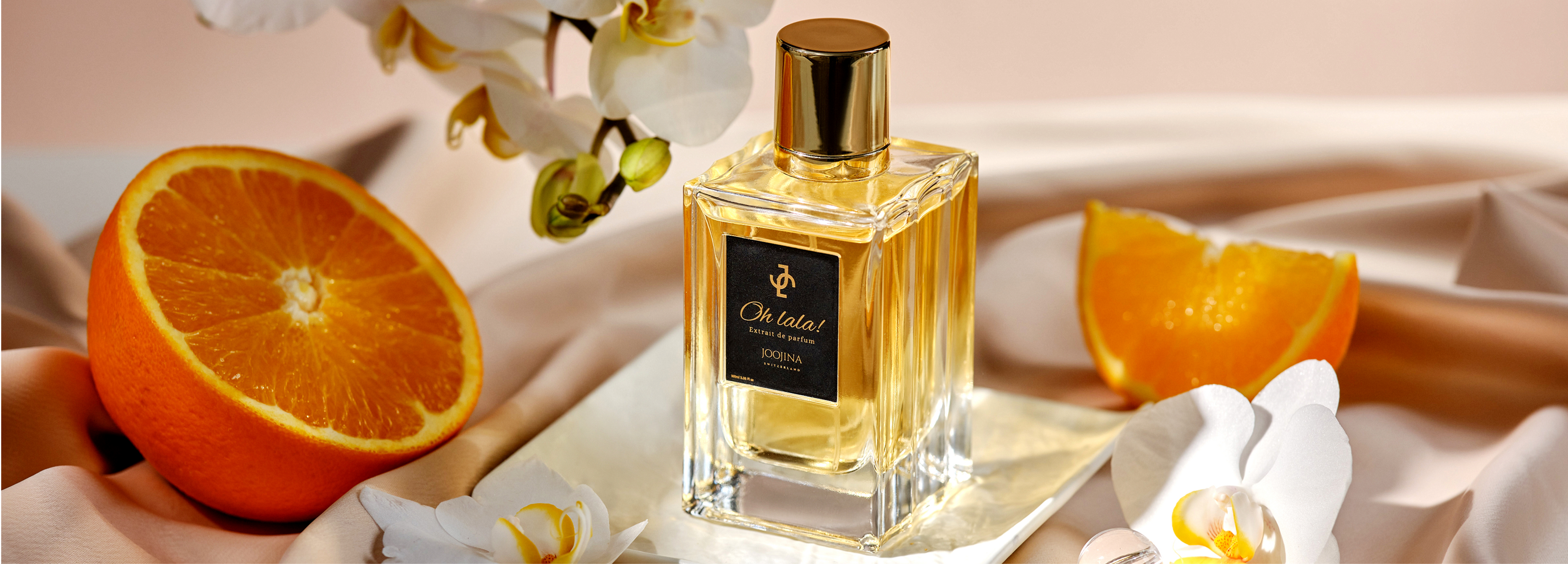
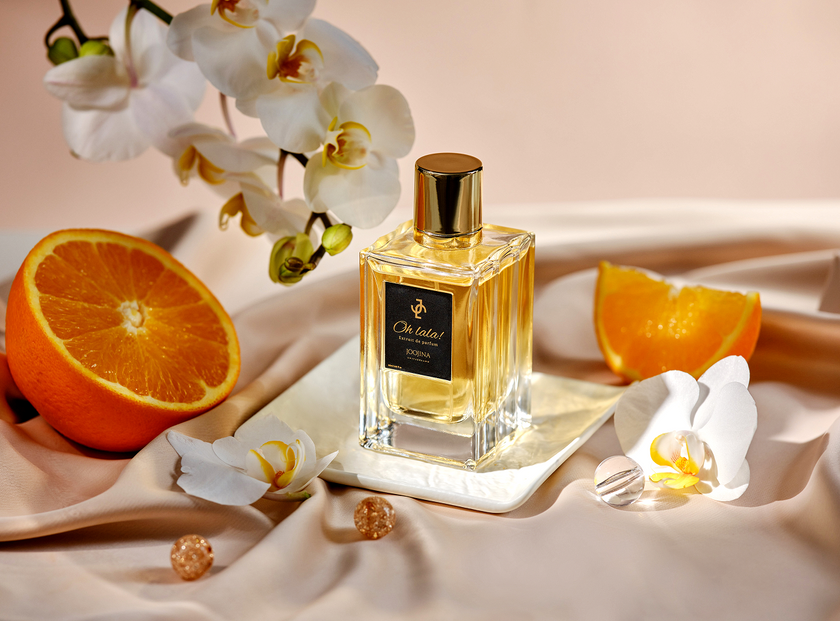
OH LALA! — Joyful, playful, radiant. For the person whose energy lights up a room without trying. If you love floral and fruity notes with warmth and optimism, OH LALA! captures that spirit.
Eau Boisee — Understated sophistication. Woody, grounding, and quietly powerful. If you appreciate things that are beautiful without being loud, Eau Boisee speaks your language.
Oops I Did It Again — Playful, surprising, full of personality. For the person who lives spontaneously and does not take themselves too seriously. If you want a fragrance that makes you smile, this is your match.
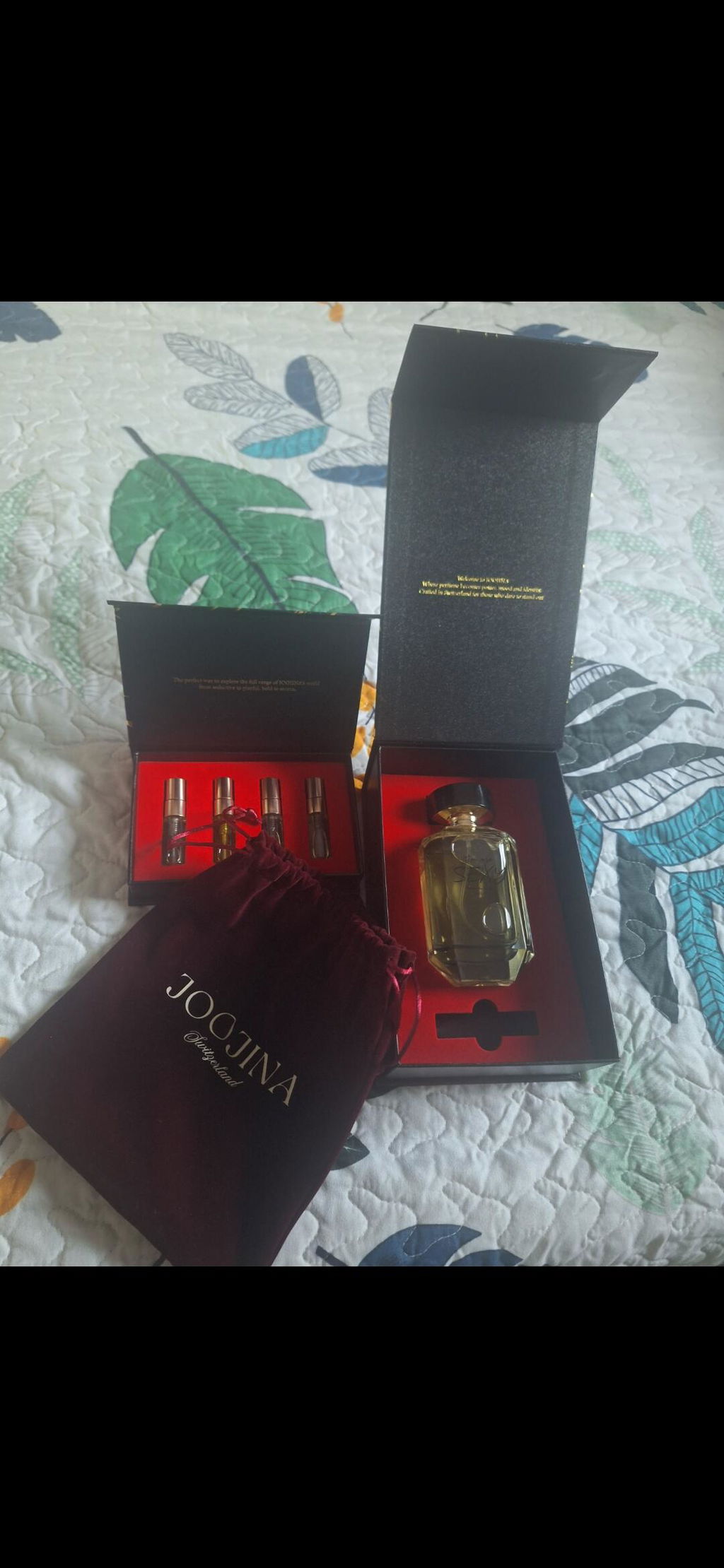
Not sure which one is you? That is completely normal — and it is exactly why we created the Discovery Kit. For 25 euros, you receive all four fragrances as samples, so you can test each one on your own skin, in your own life, over real days. Live with them. And when you find the one that keeps pulling you back — the one you reach for without thinking — that is your signature.
The kit also comes with a 25 euro voucher toward any full-size bottle, which means the sampling is essentially free. We believe the only honest way to choose a signature scent is to experience it on your own terms, in your own time.
The Short Version: A Quick Checklist
If you take nothing else from this guide, keep these principles in mind:
- Know your scent families. Are you drawn to fresh, floral, woody, or oriental? Start there.
- Always test on your skin. Paper blotters and other people's recommendations are starting points, not answers.
- Wait before you decide. The fragrance at hour three is the one you are actually choosing. Give it time.
- Limit your testing. Three fragrances per session, maximum. Your nose needs clarity.
- Wear it for a full day. One real day of wear teaches you more than a dozen counter visits.
- Trust your instincts. If you keep wanting to smell it again, that is your answer.
- Choose quality. A well-crafted extrait de parfum at high concentration will reward you with depth, longevity, and a scent that truly evolves.
There Is No Wrong Answer — Only Your Answer
Choosing a signature scent is not a test you can fail. There are only the fragrances that resonate with you — that make your ordinary Tuesday morning feel a little more intentional, a little more beautiful, a little more yours.
Take your time with the process. Pay attention to how a fragrance makes you feel, not just how it smells. The right perfume does not just sit on your skin — it becomes part of how you move through the world. And when you find it, that moment when the scent feels less like something you are wearing and more like something you simply are, you will know. That is your signature.
Ready to find yours? Explore the full JOOJINA collection or begin your journey with the Discovery Kit — four Swiss-crafted extraits de parfum, delivered to your door for just 25 euros.