How to Make Perfume Last Longer: 7 Expert Tips That Actually Work
Share
How to Make Perfume Last Longer: 7 Expert Tips That Actually Work
By JOOJINA | March 2026 | 9 min read
Knowing how to make perfume last longer is one of those questions that sounds simple until you start looking for a real answer. The advice online tends to be a short list of obvious things — spray on pulse points, do not rub — without any explanation of why those things work or what actually drives longevity. The result is that most people follow the rules without understanding the mechanism, which means they cannot adapt when the rules do not quite fit their situation.
This guide covers the seven most effective strategies, in order of impact. Some are technique adjustments you can make immediately. Others involve rethinking what you are buying. All of them are grounded in how fragrance chemistry actually behaves on skin.
If you want to understand the deeper science behind why fragrance evaporates differently depending on formulation, our detailed guide on extrait de parfum vs. eau de parfum covers the concentration question thoroughly. And if you have wondered why a fragrance that smelled so present in the shop seems to vanish by lunchtime, our piece on how long perfume really lasts explains the variables at play.
Why Most Perfumes Fade Faster Than They Should
Before the tips: a brief explanation of the mechanism. Fragrance persistence depends on three variables working together — concentration of aromatic compounds, the molecular weight of those compounds (heavier molecules evaporate more slowly), and the skin surface they are applied to. When any one of these variables is working against you, longevity suffers regardless of how expensive the bottle was.
The most common reason a fragrance fades fast is simple: dilution. A standard cologne or eau de toilette contains between 5 and 15% aromatic compounds dissolved in alcohol and water. The alcohol evaporates within seconds of application, taking a significant portion of the lighter fragrance molecules with it. What you smell for the first few minutes is primarily the top notes — the most volatile, the first to go. What remains after an hour depends entirely on what the base was formulated to hold.
Understanding this clarifies why technique matters, but also why technique has limits. Applying a poorly formulated EDT more skilfully will only get you so far. Conversely, a well-formulated extrait applied incorrectly will still outlast most EDTs by hours. The tips below address both dimensions.
7 Ways to Make Perfume Last Longer
Tip 1: Moisturize Before You Apply
This is the single most impactful technique change you can make, and the one most people skip. Dry skin — particularly during winter or after a shower — has very little surface oil to bind fragrance molecules. On dry skin, a fragrance can evaporate 30 to 50% faster than on well-moisturized skin. The explanation is direct: fragrance molecules dissolve into lipids. Lipids slow evaporation. No lipids, fast evaporation.
Apply an unscented body lotion or moisturizer to the areas where you plan to spray — wrists, neck, inner elbows — and let it absorb for two to three minutes before applying fragrance. The lotion does not need to be expensive or fragrance-free (though fragrance-free avoids any unintended interaction). What matters is that the skin surface is hydrated and has a base of emollients for the fragrance to adhere to.
In summer, this is less critical because natural skin oils increase. In winter, or on particularly dry skin types, moisturizing first can add two to three hours of perceptible longevity to the same fragrance applied on the same pulse points. It costs nothing extra and takes two minutes.
Tip 2: Apply to Pulse Points — But Know Why
You have heard this one before. Pulse points — the inside of the wrist, the base of the neck, behind the ears, the inside of the elbow, behind the knees — are the standard recommendation for fragrance application. The reason they work is heat. Pulse points are areas where blood vessels run close to the skin's surface, generating a locally elevated temperature. That warmth accelerates the evaporation of fragrance molecules, which increases projection — you smell stronger to others — while the continuous warmth ensures the base notes release slowly and evenly over time.
The practical implication is that you should choose pulse points based on where you want the scent to project, not just which ones are convenient. The neck and sternum project upward toward the face — the person close to you will smell it most. The wrists project when you gesture or shake hands. Behind the knees and inner elbows project upward as you move, creating a scent trail.
For maximum longevity, apply to at least two separate pulse point areas — this creates a "scent ecosystem" on the body rather than a single evaporating point. Wrist plus neck is the classic combination for good reason.
Tip 3: Never Rub Your Wrists Together
The instinct to rub wrists together after applying fragrance is almost universal, and it actively shortens the life of your scent. The friction generates localized heat, which accelerates evaporation of the top notes — the most volatile and most expensive components of the formula. It also physically disrupts the layered structure of the fragrance accord, breaking down the ordered release of top, heart, and base notes that the perfumer designed. The result is that the fragrance develops faster, flatter, and dissipates sooner.
The alternative is to spray, then wait. Let the alcohol carrier evaporate on its own within the first thirty seconds. The fragrance will then begin its natural development on your skin without interference. If you feel the need to do something with your wrists after applying, press them gently together once without rubbing — the warmth transfers without the friction that causes degradation.
This single change, consistently applied, will extend the perceived freshness of your top notes by ten to twenty minutes — which matters when the top notes are what forms the first impression.
Tip 4: Choose the Right Concentration — This Changes Everything
If you want to know how to make perfume last longer and you could only change one thing, change what you are buying. The concentration of aromatic compounds in a fragrance is the primary determinant of longevity, and the differences between tiers are significant.
Cologne (EDC) and eau de toilette (EDT) typically contain 5–15% aromatic compounds. They are inexpensive to produce, approachable in projection, and often gone within two to four hours on most skin types. Eau de parfum (EDP) lifts this to 15–20%, which buys you four to six hours reliably. Extrait de parfum (the highest concentration, sometimes called "perfume" or "pure parfum") runs at 20–40% or higher — and on well-moisturized skin, can last ten to fourteen hours.
The assumption that concentration creates heaviness is incorrect. An extrait built on light, fresh notes — citrus, heliotrope, clean sandalwood — does not smell heavy. It smells present. The sillage (the projection radius) may be smaller than a heavy EDP spray, but the skin scent and close-range presence lasts significantly longer. For all-day wear without reapplication, extrait is the professional's choice.
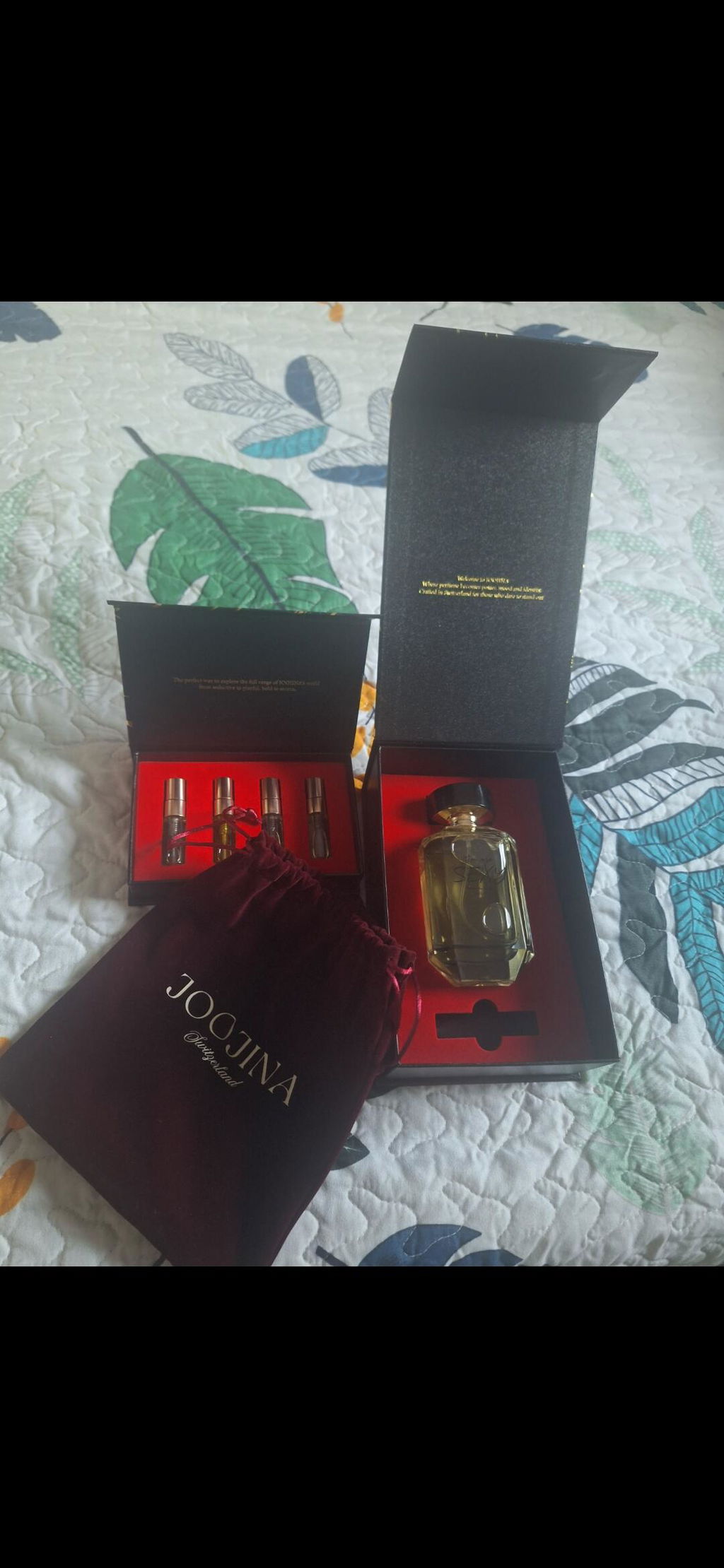
JOOJINA's full range — all four fragrances available in the Discovery Kit — is formulated at 30–40% concentration. That is a deliberate decision. A single morning application should carry through an entire working day and into the evening.
| Concentration Type | Aromatic Compound % | Typical Longevity | Best For |
|---|---|---|---|
| Eau de Cologne (EDC) | 2–5% | 1–2 hours | Immediate freshness, heavy reapplication |
| Eau de Toilette (EDT) | 5–15% | 2–4 hours | Casual wear, light projection preference |
| Eau de Parfum (EDP) | 15–20% | 4–6 hours | Evening wear, reliable day-to-afternoon |
| Extrait de Parfum | 20–40%+ | 8–14+ hours | All-day wear, events, minimal reapplication |
Tip 5: Layer Strategically
Layering — applying multiple products from the same fragrance line, or complementary scent products, in sequence — is one of the most effective methods for extending longevity. The concept is additive: each layer creates an additional reservoir of fragrance molecules that evaporate at different rates, which means the overall scent impression persists longer even as individual layers fade.
The most straightforward layering approach uses a scented body lotion or shower gel from the same fragrance line as your perfume. This creates a matched base that the perfume sits on top of, extending the drydown significantly. For those without a matching body product, a light application of unscented petroleum jelly (Vaseline) on pulse points works surprisingly well as a fragrance base — the occlusive texture holds molecules against the skin effectively.
A second layering strategy is the "fragrance wardrobe" approach: wearing one fragrance on skin and a complementary note on hair or clothing. Hair holds scent extremely well — the natural oils trap fragrance molecules, and the movement of hair creates a persistent sillage trail. A light spray held at arm's length toward freshly dried hair can add two to three hours of trailing presence that the skin application alone cannot replicate.
Tip 6: Apply to Clothing — But Only for Specific Purposes
Fabric holds fragrance longer than skin in most circumstances. The fibres trap molecules mechanically in a way skin cannot. A cashmere sweater sprayed lightly with a fragrance can still smell distinctly of that scent twenty-four to forty-eight hours later. For practical longevity, a single spray on the inside of a collar or on a scarf can function as a background presence that the skin-applied fragrance sits against.
The caveat is important: applying fragrance to fabric prevents the dynamic development — the top, heart, and base note arc — that makes a good fragrance interesting. On fabric, you smell what you spray, indefinitely. On skin, the fragrance develops, reacts to your chemistry, and changes through the day. For experiential richness, skin is the right surface. For raw longevity and trail, fabric works.
Additionally: never spray directly on delicate fabrics (silk, lace, light linen). The alcohol carrier can leave visible marks. Apply to less visible areas — collar lining, the inside hem of a sleeve — or apply to skin only and allow natural transfer to occur through wear.
Tip 7: Store Your Fragrance Correctly
A fragrance stored incorrectly degrades over months, losing top notes and developing a flat, sometimes sour base. Heat, light, and humidity are the three enemies of fragrance stability. The bathroom — where most people keep perfume — is the worst possible environment: steam from showers creates humidity, temperature fluctuates dramatically between a hot shower and a cold morning, and light exposure degrades the UV-sensitive compounds in many citrus and floral ingredients.
The ideal storage location for a fragrance is away from direct light, at stable room temperature (15–20°C), and away from humidity sources. A drawer, a cupboard, or a dedicated fragrance cabinet all work. If you have bottles you wear infrequently, a cool dry cupboard is better than a sunny shelf.
The practical consequence of poor storage is not just degradation — it is that you may incorrectly attribute the fragrance's faded performance to concentration or formula when the actual cause is molecular breakdown from heat and light exposure. A well-stored extrait will outperform a poorly stored one from the same bottle at the six-month mark. This is not a small difference; it can be the difference between a fragrance you love and one that starts to smell "off."
A Note on Skin Type and Chemistry
All seven tips above operate against a variable you cannot fully control: your skin chemistry. Skin pH, natural oil production, diet, hydration level, and even medication all affect how a fragrance performs on a specific person. This is not a reason for frustration — it is the reason fragrance is personal. A scent that lasts eight hours on one person may last five on another wearing the same concentration, applying to the same pulse points, with the same technique.
Dry skin types consistently report shorter longevity than oily skin types. This is the primary driver behind the moisturizing tip (Tip 1): it partially compensates for the natural oil deficit that reduces fragrance adhesion. If you have very dry skin and find that even extraits fade faster than expected, consider applying a richer base cream before fragrance — something with shea butter or similar occlusives — rather than a water-based lotion.
The chemistry variable is also why sample testing on your own skin is non-negotiable before purchasing a full bottle. What you smell in a shop, on a strip, or on another person is an approximation. The only test that matters is how a fragrance develops on your skin across a full day.
Common Mistakes That Kill Longevity
Over-applying to compensate for fading. If a fragrance fades quickly, the instinct is to spray more. This addresses a symptom while ignoring the cause. More EDT will still evaporate. The fix is either the technique (Tips 1–3, 7) or the product (Tip 4).
Applying after moisturizer has dried completely. The moisturizer should be slightly tacky or just-absorbed, not fully dry, when you apply fragrance. A fully dried lotion has already locked its surface; fragrance applied on top will not penetrate as effectively.
Spraying too far from the skin. A spray held fifteen centimetres from the skin disperses correctly. A spray held thirty centimetres away allows significant evaporation before the fragrance even reaches the skin, wasting top notes and alcohol carrier on the air rather than on you.
Reapplying before the base has developed. If a fragrance seems to have faded after an hour, it may be undergoing transition between top and heart notes — the mid-development phase where projection drops before the base note phase begins. Wait an additional thirty to sixty minutes before concluding it has faded and reapplying. The base is often quieter than the top but still present; reapplying over it creates an unwanted doubling of concentration in the opening notes.
Frequently Asked Questions
How to make perfume last longer on dry skin specifically?
Apply a rich, fragrance-free moisturizer to pulse points before spraying — something with shea butter, jojoba oil, or squalane will hold fragrance molecules significantly longer than a water-based lotion. On very dry skin, a thin layer of unscented petroleum jelly (Vaseline) directly on pulse points before fragrance application works particularly well: the occlusive texture prevents rapid evaporation and can extend longevity by two to three hours. Hydration from within also matters — well-hydrated skin produces more natural surface oils, which helps fragrance adhere across the day.
Does extrait de parfum really last that much longer than EDP?
Yes, in most cases the difference is meaningful and perceptible. An EDP at 15–20% typically lasts four to six hours on skin; an extrait at 30–40% will typically last eight to twelve hours or more under comparable conditions. The difference is not linear (double the concentration does not mean double the longevity) but is consistently significant across skin types and fragrance families. The other variable is that extraits tend to be more carefully formulated — the higher concentration justifies higher-quality raw materials and more precise accord construction, which also contributes to better longevity in practice.
Is it worth reapplying perfume during the day, or is that a sign of a poor fragrance?
Reapplication is not inherently a sign of a poor fragrance — an EDT by design requires it, and some people enjoy the ritual. But if you are spending EUR 80–160 on a niche fragrance and finding yourself reaching for the bottle again by mid-afternoon, that is a signal worth taking seriously. Either the concentration is not high enough for your skin type, or the formula's base notes are not strong enough to carry through the day. An extrait should not require reapplication for a standard working day on most skin types. If it does, the formula's durability — not your application technique — is probably the issue.
Can I layer different fragrances to extend longevity?
Yes, but with care. Layering two different fragrances together is most effective when their base notes are complementary — similar musk families, compatible woody or floral anchors. Layering a light citrus fragrance over a sandalwood base is a classic combination that extends the citrus character while the wood holds. Layering two complex accords without regard for how they interact can produce muddled results that neither hold well nor smell coherent. A simpler and more reliable approach is to layer a matching body product (lotion, oil) from the same fragrance line under your primary perfume, which creates depth and longevity without the compatibility risk.
Find What Lasts on Your Skin
All seven tips above will improve the longevity of any fragrance you currently own. But the most meaningful improvement — by far — comes from choosing the right concentration from the start. That means testing on your own skin, across a full day, before committing to a full bottle.
The JOOJINA Discovery Kit was designed for exactly this evaluation. For EUR 25, you receive four 3ml extraits — enough for several full-day tests of each fragrance — along with a EUR 25 voucher that applies to any full-size purchase. You will find out exactly how each formula performs on your skin: how it opens, how it develops, and how long it genuinely lasts without reapplication. That is the only data that actually answers the longevity question for you specifically.